From brief to install: how a Novah Signs job actually runs
The three-step path from first conversation to fitted signage, and what we need from you at each stage.
You should not have to project-manage a designer in one town, a printer in another and a fitter who has never seen the artwork. That is the gap we exist to close, from a single van to a totem at the gate.
1. Design
We start with what the sign, wrap or print has to do, who needs to see it and where it will live. If you already have a brand, we work within it. If you don’t, we build one that holds up just as well on a van as it does on a fascia or a label.
Nothing is printed until you have signed off a proof. A “revision” here means one consolidated set of changes, not an open-ended ping-pong of one-line emails.
The proof is always on your actual vehicle or elevation. A generic template is how brands drift between the van and the shop.
2. Manufacture
Print and finishing happen in our workshop in Augher. Cast vinyls, composite aluminium, acrylics, lit builds and commercial print are specified for the job, not whatever happens to be in the rack.
Because it is made here, we can catch a colour or a cut before it leaves the building. That is harder to do when the files have already gone to a third party.
3. Install
Certified fitters put the work up on site. A single fascia, a full fleet, an internal reception wall: the person fitting it has the spec, not a vague instruction to “put the sign on the front”.
We plan around your hours. A shop that cannot close, a yard that needs the gate clear, a van that has to be back on the road the same day: tell us in the brief.
What we need from you
A clear idea of the outcome, access to the vehicle or the building, and a decision-maker who can approve the proof. We will chase the rest.
If you would rather talk it through than fill a form, call the workshop. If you already know the spec, start a quote and we will come back to you directly. No figures guessed on the website.
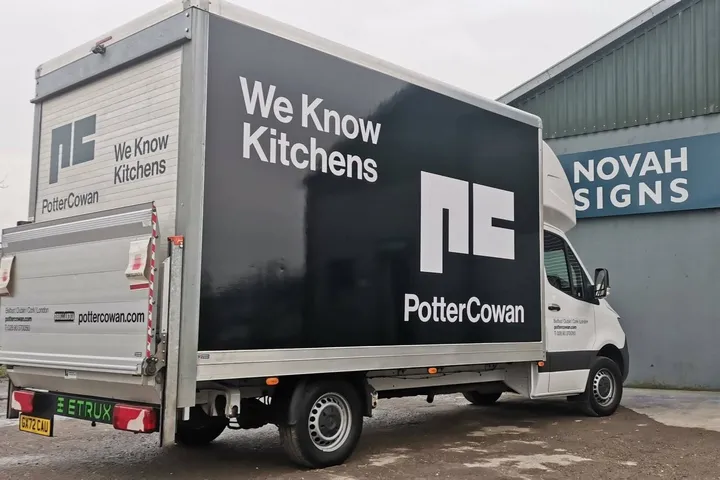
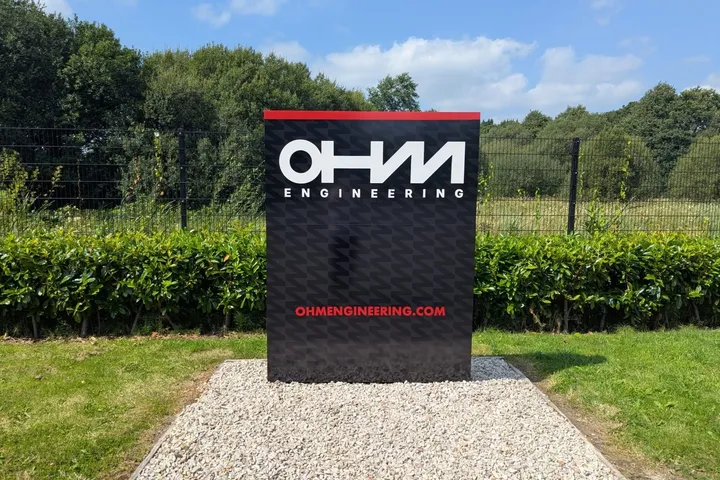
The Potter Cowan truck and the OHM totem are two ends of the same path: design, make, fit. The service pages spell out what to send for each type of job.